


SaaS tool guide
Deel vs Remote vs Oyster 2026: Global Hiring Platforms
Compare Deel vs Remote vs Oyster 2026: Global Hiring Platforms by buyer fit, rollout effort, pricing, integrations, and operational tradeoffs.
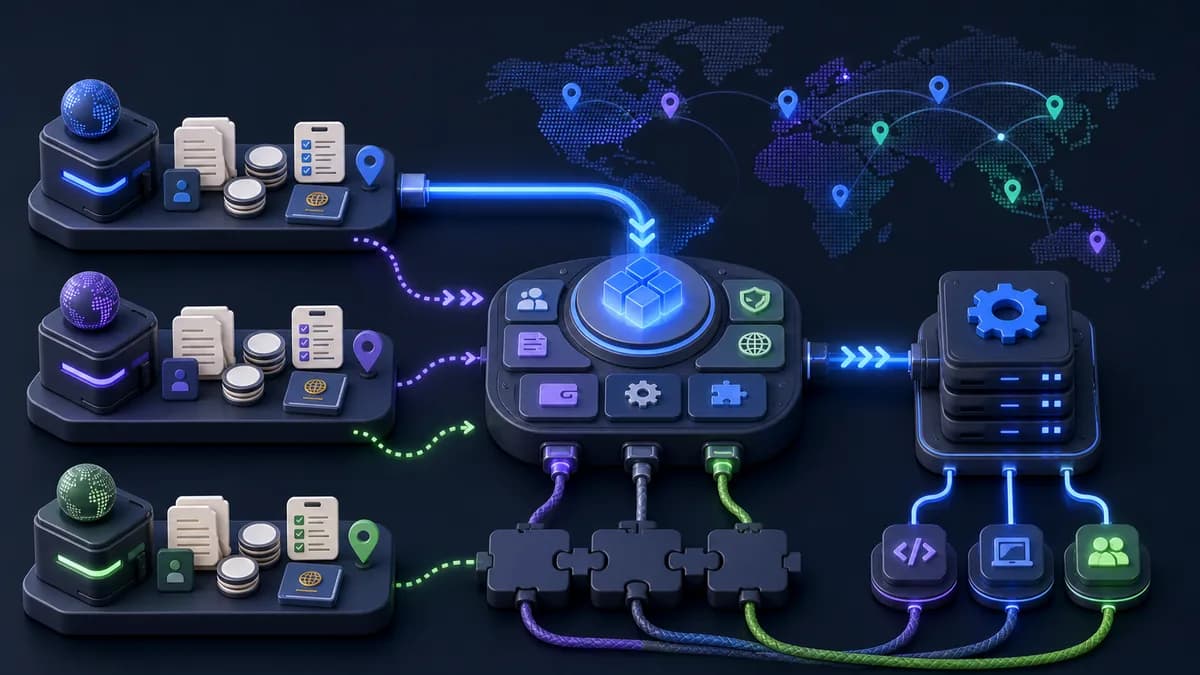
An employer-of-record decision is country-, worker-, contract-, and payroll-specific. Deel, Remote, and Oyster advertise global hiring services, but a headline price or country count cannot establish legal coverage, total employment cost, onboarding quality, or termination fit for a particular hire.
TL;DR verdict
Use country-specific diligence and conditional fit. Deel currently advertises EOR from $599 per employee per month. Remote and Oyster advertise EOR at $699 per employee per month. Those are base service prices, not total employment cost. Compare same-day quotes only after confirming the hiring country, owned-versus-partner entity, worker type, employment agreement, benefits, payroll calendar, foreign exchange treatment, integrations, support, termination, deposit, and total contract.
There is no universal winner. Ask each provider for the same jurisdiction and worker scenario, then compare the written contract, service scope, fee schedule, data flow, escalation path, and offboarding terms.
Key takeaways
- Recalculate on the same day with country and fee scope held constant; $599 and $699 are starting EOR service prices.
- Keep EOR, PEO, contractor management, contractor of record, payroll, and HRIS modules separate.
- Run a sandbox test for exact field mapping, read and write direction, cadence, errors, and plan and region boundary.
- The reviewed first-party evidence has no comparable ratings dataset, normalized workforce outcome dataset, or reproducible comparative study.
- Official page reachability is point-in-time evidence, not country coverage, payroll timeliness, legal advice, or future pricing.
At a glance
| Provider | Documented scope used here | Shortlist when | Confirm before signing |
|---|---|---|---|
| Deel | EOR and adjacent global hiring services, pricing, and partner or API connections | Its exact country, entity, employment, payroll, benefit, and integration path matches the hire | Entity model, agreement, fee schedule, deposit, FX, benefits, statutory charges, support, termination, data flow, and local counsel review |
| Remote | EOR service and pricing with referenced integrations | Its exact country and service model fit the planned worker and payroll process | Owned or partner delivery, contract, payroll calendar, benefits, pass-through charges, support, integration behavior, termination, and data export |
| Oyster | Remote hiring and EOR service, pricing, and integration paths | Its exact country workflow and HR-system connections fit the operation | Country availability, agreement, benefits, payroll, fees, deposit, FX, integrations, support, offboarding, and data handling |
Define the hire before comparing providers
Write one scenario for each country and worker type:
- hiring entity and worker location;
- employee or contractor classification;
- role, salary currency, start date, and working schedule;
- statutory and optional benefits;
- probation, leave, expense, and equity requirements;
- payroll cutoff, payment currency, and exchange-rate expectations;
- data, identity, accounting, and HR-system integrations;
- termination, severance, equipment, and document-retention needs.
Use the scenario in every provider request. A global overview cannot replace a country-specific confirmation and contract review.
Build a complete cost schedule
On 2026-08-25, Deel showed EOR from $599 per employee per month, while Remote and Oyster showed $699. Compare those values only as base service prices. Ask for a written schedule covering the billing term, setup, deposits, foreign exchange, benefits, statutory contributions, payroll, contractor or EOR scope, support, pass-through costs, offboarding, and termination.
Model the same salary, currency, benefits, start date, and contract term for every provider. Separate provider fees from wages, taxes, statutory contributions, benefits, and reimbursable expenses. Recheck the active pricing page and quote on the day the company decides.
Keep service boundaries explicit
The provider pages describe legal-employer, onboarding, payroll, benefits, compliance, contractor, and HR workflows. Keep service-specific scope and the jurisdiction boundary explicit because availability and responsibility can vary by country and module. Do not collapse EOR, PEO, payroll, contractor management, contractor of record, HRIS, or recruiting into one row.
For each requirement, record who is legally responsible, who performs the work, who handles an exception, which agreement governs it, and where the employee or company can escalate. Obtain local legal and tax advice where required; a provider's product page is not a substitute.
Test integrations with representative records
Deel documents partner and API connections. Remote references integrations on its EOR surface. Oyster documents HRIS, ATS, ERP or accounting, expense, equity, Slack, Zapier, and API paths. Verify the exact connector and plan rather than inferring parity from category labels.
A sandbox test should create or import a representative worker, update compensation or profile data, handle a validation failure, and reconcile the result downstream. Record exact field mapping, system of record, read and write direction, refresh cadence, regional availability, permissions, error handling, and manual fallback.
Contract and exit checklist
Before signing, review:
- provider entity or partner for the hiring country;
- employment agreement and allocation of responsibilities;
- complete fees, deposits, FX, pass-through charges, and billing cadence;
- payroll dates, corrections, taxes, statutory contributions, and benefits;
- support hours, escalation, and incident ownership;
- termination, severance, notice, equipment, and final payroll;
- data processing, residency, subprocessors, retention, and export;
- renewal, price change, migration, and exit terms.
Evidence cards
- Ratings boundary: the reviewed first-party pages provide no normalized rating, satisfaction, customer, worker, or country-success dataset across all three providers.
- Outcome boundary: no normalized workforce-outcome dataset supports a provider-level conclusion.
- Benchmark boundary: there is no reproducible comparative study of hiring speed, onboarding risk, compliance quality, payroll accuracy, support, or cost.
- Availability boundary: selected official pages returned 200 on 2026-08-25. Confirm the exact country and service again; source access does not establish live legal or payroll coverage.
Methodology and limits
We reviewed current first-party EOR, pricing, partner, and integration pages accessed on 2026-08-25, followed by an immediate source transport check.
The final selection requires current quotes, country-specific confirmation, contract review, a representative data-flow test, and advice from qualified legal and tax professionals. We did not infer popularity, employee outcomes, compliance quality, or comparative performance from provider pages.
FAQ
Does a lower starting EOR price establish total cost?
Not necessarily. Compare the same country, worker, salary, benefits, billing term, deposit, FX, pass-through charges, support, and offboarding terms in written quotes.
Does a country listed on a provider site guarantee service for my hire?
No. Confirm the country, worker type, provider entity or partner, start date, and contract immediately before proceeding.
What should the integration pilot cover?
Use a representative worker record and test field mapping, writes, updates, errors, reconciliation, permissions, and manual fallback in the intended region and plan.
Related guides
Sources
Accessed 2026-08-25:
The SaaS Tool Evaluation Guide (Free PDF)
Feature comparison, pricing breakdown, integration checklist, and migration tips for 50+ SaaS tools across every category. Used by 200+ teams.
Join 200+ SaaS buyers. Unsubscribe in one click.